Mobile Phone Technology
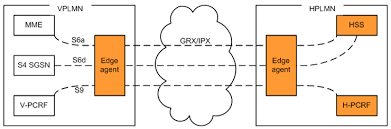
Mobile roaming
image ©huaweiWhen a customer purchases a SIM the details are input to the home network, this included details of the SIM, the customer details and the billing details including what is permitted with this SIM.
Everytime a mobile device with that SIM is switched on, it has to be registered on the network. The device will search for the strongest home network signal. Assuming that one is found; the device is registered on that network using the IMSI (International Mobile Subscriber Identity). This registration will :
- Check that the equipment is not blacklisted.
- Set up authentication which is carried out using public - private key authentication
- Add the IMSI and other details to the Unified Data Management system (5G)
When a phone is roaming, not within the home country the process is similar but the phone will not find the home network. It will search for the strongest signal. Once found it will ask if it can join that network. The roaming network will then have to negotiate with the home network to check if the SIM can be registered on the roaming network. If this is rejected, then the MS will search for another network. When a roaming network is agreed with the home network a TIMSI (Temporary IMSI) will be allocated to the SIM and this will be used on the roaming network for management of the SIM. Settings on a phone can give priority to some networks whilst roaming. Additionally the visiting network will (in most countries) also check that the mobile device is not a stolen or otherwise blacklisted device
There is no technical reason why roaming within the home country is not allowed. Thus for example a Vodafone SIM could be allowed to roam onto a O2 or EE network. The only reason to prohibit intra country roaming is that the home network (Vodafone in this example) does not allow it for commercial reasons. However intra country roaming could solve some of the not-spots in the UK.
Within the UK a Vodafone (for example) customer may not have the strongest possible signal, the O2 or EE signal may be better. When abroad, France for example, a Vodafone customer will always have the strongest signal as Vodafone will allow the customer to roam to any network in France, and the roaming will pick the strongest be that Orange, SFR, Bouygues Telecom, or Free.
We may have started to use our mobile phones to make phone calls but now these devices are key to our modern society. We use our mobile phones for directions in a strange city; to access our money through our banking and credit card apps; for tickets to travel whether that is bus, train or air; to watch videos; to take images and buy stuff.
But how does mobile phone technology work? mobilephonetechnology.co.uk seeks to provide information about the technology behind the mobile phone in order to aid understanding and promote more realistic discussions about the technology. Understanding some of the basics of mobile phone technology will help explain how things work and what can and cannot be done with mobile phone technology.
mobilephonetechnology.co.uk is a FREE online resource. Have you found it interesting? You can say thank you and buy me a coffee here. Thank you very much.
w : mobilephonetechnology.co.uk
e :
 Blog
Blog
© mobilephonetechnology.co.uk all rights reserved 2017-2026