Mobile Phone Technology
3G Mobile Network
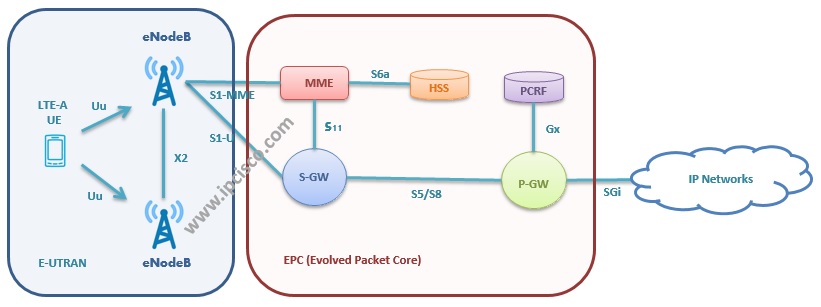
image ©fromgentogen.usThe move to 4G LTE is a move to an Enhanced UTRAN architecture. The technology behind 4G is LTE standing for Long Term Evolution and the move to 4G was an evolution to the previous 3G network.
The 4G LTE or Enhanced UTRAN comprises :
- An enhannced Node B, which is the transceiver controlling the air interface that switches to the evolved Packet Core.
- The evolved packet core includes the serving gateway to control access to Packet Gateway or Packet Data Network.
- Managing the 4G network is the MME [Mobility Management Entity]. This is the core component in the 4G LTE architecture. It authenticates the mobile device and maintains the location of it thus taking over the role of the AUC [Authentication Centre] and VLR [Visitor Location Register] in 3G. A HSS [Home subscriber Servic]e provides the HLR [Home Location Register] functionality. Additionally the MME selects for the user equipment the correct SGW [Serving GateWay] to pass the data through. Pooling of MME resources can provide a more robust network.
- The MME can also switch the device to the 2G / GSM network if separate phone services are required. This happens if VoLTE is not available for the device at it's location.
We may have started to use our mobile phones to make phone calls but now these devices are key to our modern society. We use our mobile phones for directions in a strange city; to access our money through our banking and credit card apps; for tickets to travel whether that is bus, train or air; to watch videos; to take images and buy stuff.
But how does mobile phone technology work? mobilephonetechnology.co.uk seeks to provide information about the technology behind the mobile phone in order to aid understanding and promote more realistic discussions about the technology. Understanding some of the basics of mobile phone technology will help explain how things work and what can and cannot be done with mobile phone technology.
mobilephonetechnology.co.uk is a FREE online resource. Have you found it interesting? You can say thank you and buy me a coffee here. Thank you very much.
w : mobilephonetechnology.co.uk
e :
 Blog
Blog
© mobilephonetechnology.co.uk all rights reserved 2017-2026