Mobile Phone Technology
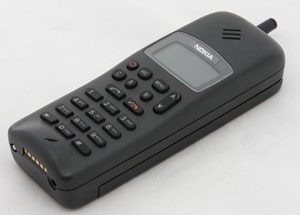
Nokia 1011 - Nokia's first 2G phone.
image ©NokiaThe original mobile phone network was analogue which had many problems, most seriously the security of the phone call, people could easily listen in. In 1991 there was a swap into a digital network, this is 2G. 2G allowed for greater network capacity and being a digital network it allowed the operators to add some security to the network. The emphasis was still on the phone network, on phone services, with the only devices connected to the 2G network, initially, being mobile phones.
As well as phone services, a simple SMS messaging service was introduced. SMS uses the spare capacity on the network control channel to send messages. Originally SMS messages were used by network technicians to communicate. SMS provided phone customers a simple messaging system, something we had not seen before.
Data was also supported but initially as a dial-up connection on the phone system; reflecting the contemporary way the Internet was delivere to households. The user could have a phone call or send data but not both. Speeds were measured in Kbps rather than the Mbps. The Internet was available but very slow, used a special technology [WAP rather than HTML] but it was the internet on the phone.
Later, as data became more important, enhancements were made to 2G. Most notably GPRS where a separate packet switched always-on network for data was introduced. Later enhancements to this network included Edge technology. By this time 2G was a respectible network but too slow for the modern user
In the UK there were four 2G networks (Vodafone, O2, Orange and T-Mobile). These operators, or their equivalent, still maintain a 2G network today. This provides a back up phone system when 4G calling is not available in areas of difficult coverage. 2G is also currently used for a number of IoT applications most notably the communications associated with smart meters; but also alarms, health sensors, weather recording, parking machines and traffic lights.
We may have started to use our mobile phones to make phone calls but now these devices are key to our modern society. We use our mobile phones for directions in a strange city; to access our money through our banking and credit card apps; for tickets to travel whether that is bus, train or air; to watch videos; to take images and buy stuff.
But how does mobile phone technology work? mobilephonetechnology.co.uk seeks to provide information about the technology behind the mobile phone in order to aid understanding and promote more realistic discussions about the technology. Understanding some of the basics of mobile phone technology will help explain how things work and what can and cannot be done with mobile phone technology.
mobilephonetechnology.co.uk is a FREE online resource. Have you found it interesting? You can say thank you and buy me a coffee here. Thank you very much.
w : mobilephonetechnology.co.uk
e :
 Blog
Blog
© mobilephonetechnology.co.uk all rights reserved 2017-2026