Mobile Phone Technology
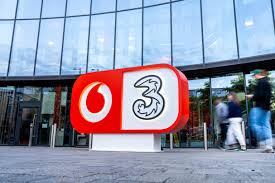 image ©vodafone.co.uk
VodafoneThree came about following the merger of the Vodafone and Three mobiles networks in May 2025. The combined network is using the VodafoneThree name at present, it is expected that a long term name will be identified later. Initially these two mobile networks are working independently with their own marketing and networks, although work is being carried out to allow the customers from each company to use the other company's network. This is being carried out using Multi Operator Core Network technology.
Vodafone, by itself has 19.7% share in the UK mobile phone market and is the 3rd largest of the mobile phone companies. It was one of the original mobile network operators in the UK, and have had a presence from 1G at the start to 5G today. Vodafone has a large amount of available frequency for their operation.
- Vodafone uses 900MHz for their 2G network
- Vodafone used 2100MHz for their 3G network which has now been freed up to be used on 4G following the switch off of 3G
- Vodafone uses 800MHz and 2600MHz for 4G plus other blocks of frequency.
- Vodafone uses 3.4GHz-3.8GHz for 5G as well 900MHz re-farmed from 2G
Vodafone as a company have expanded from a mobile operator to growing broadband business, leasing fibre lines from OpenReach. They have around 12% of UK broadband customers. They claim to be able to offer 47% of the UK population Vodafone Broadband. They have a presence on the High Street, selling home broadband, mobile phones, mobile routers and data connections (SIMs) to their network.
Three is the smallest of the UK mobile operators with 12% of the UK market. They claim a 99.8% population coverage in the UK. They came into the market with the advent of 3G. For many years, in surveys of performance, THREE came around third although more recently they have seen figures up at the top and competing with EE.
In the execution of the 3G auction the government wanted to protect a new license for a new entrant into the UK market. THREE, owned by Hutchison telecom, was the sucessfull company. They do not have a 2G network; but have extensive 3G, 4G and 5G networks. THREE are at the forefront of offerring unlimited (or at least large data allowances) at a reasonable cost, thus they have attracted large data users. Additionally THREE are marketing mobile WiFi as a true competitor to home fixed broadband.
- Three used 2100MHz for their 3G network which has now been freed up to be used on 4G following the switch off of 3G
- Three uses 800MHz and 2600MHz for 4G
- Three uses 700MHz and 3.4GHz-3.8GHz for 5G
Three purchased only 20MHz of the 3.4GHz frequency band in which to run their 5G network, the smallest of the operators. However, as a bit of forward planning, Three purchased UK-Broadband which owned a significant amount of frequency at 3.6-3.8GHz bandwidth. Together with the 5G purchase THREE has a lot of 5G frequency.
Three have attracted many customers who use large amounts of data. Their CEO is promoting large data deals as he sees the mobile network as a direct competitor to WiFi and home broadband. THREE have been at the front of the drive for mobile broadband to be used whilst travelling and as an alternative to land based home broadband. THREE run a number of high street shops as well as an online presence selling devices for their network.
We may have started to use our mobile phones to make phone calls but now these devices are key to our modern society. We use our mobile phones for directions in a strange city; to access our money through our banking and credit card apps; for tickets to travel whether that is bus, train or air; to watch videos; to take images and buy stuff.
But how does mobile phone technology work? mobilephonetechnology.co.uk seeks to provide information about the technology behind the mobile phone in order to aid understanding and promote more realistic discussions about the technology. Understanding some of the basics of mobile phone technology will help explain how things work and what can and cannot be done with mobile phone technology.
mobilephonetechnology.co.uk is a FREE online resource. Have you found it interesting? You can say thank you and buy me a coffee here. Thank you very much.
w : mobilephonetechnology.co.uk
e :
 Blog
Blog
© mobilephonetechnology.co.uk all rights reserved 2017-2026